
Reseller guides
Buying Estate Sale and Bulk Lots to Resell: Is the Box Worth It?
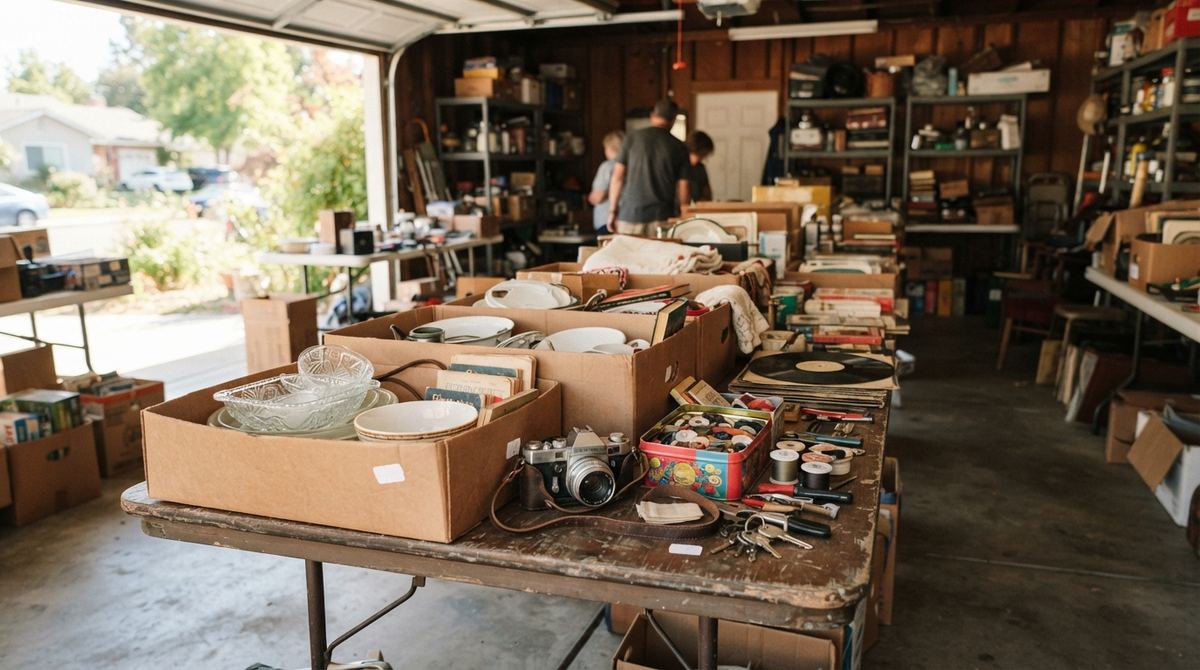
Buying lots to resell is how a lot of resellers find their best margins: one price for a whole box, and the good pieces inside pay for everything else. It’s also how a lot of garages fill up with stuff nobody wants. The difference is a couple of minutes of math before you hand over the cash. Here’s how to tell whether an estate sale box or bulk lot is worth it.
Why lots can beat buying one piece at a time
A lot is anything sold for one price: a box at an estate sale, a “fill a bag for $10” deal on the last afternoon, a bin at an auction, or an online bundle of video games. Sellers price lots to get rid of things, not to get top dollar for each piece, so the price per item is often far lower than you’d pay one at a time.
The catch is that you’re buying everything in the box, including the parts you don’t want:
- The keepers: the few pieces that will actually sell and make the money.
- The fillers: small things that might sell for a few dollars, or go into a bundle.
- The duds: broken, dirty or unsellable pieces that you’ll donate or throw away. They still cost you time.
The quick math: is the box worth it?
You can do this on your phone in the driveway. Ignore the fillers and duds at first and price only the keepers.
- Pick out the keepers. Usually two to five pieces in a box. Be honest: “might be worth something” isn’t a keeper.
- Check sold prices, not asking prices. On the eBay app, search the item and filter to Sold items. What people actually paid recently is what you’ll likely get.
- Take off the selling costs. For most eBay categories, plan on roughly 13–15% of the sale going to fees (see eBay’s selling fees), plus packaging. Keeping about 85% of the sold price is a good rough number.
- Pay a fraction of what’s left. Many resellers aim to pay no more than about a third of what the keepers will bring in after fees. That leaves room for the duds, the time, and the item that sits longer than you hoped.
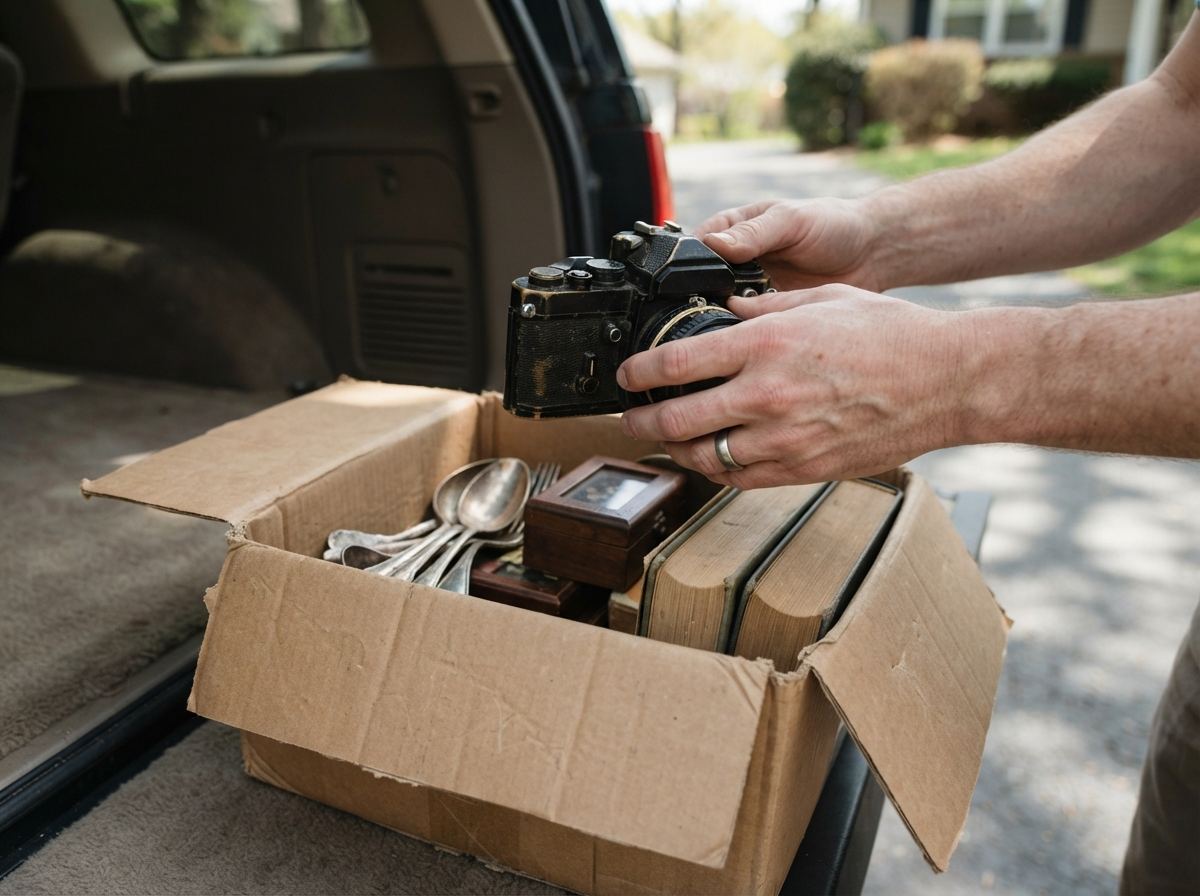
Example: a box is marked $40. Inside are a film camera (recent sold prices around $55), a set of four vintage glasses (about $25), two hardcover books (about $10 each) and a jumble of odds and ends.
Keepers: $55 + $25 + $10 + $10 = $100 in sold prices.
After fees and supplies (about 85%): about $85.
A third of that: about $28.
At $40 it’s a stretch. Offer $25–30, or come back on the half-price day.
One rule of thumb you’ll hear a lot: buy the box if one item pays for it. It’s a good gut check. If the single best piece, after fees, covers the whole price, everything else is profit, and the box is very hard to lose money on.
Also ask yourself what it will cost you in time. Twenty items that each sell for $8 can take more work than one item that sells for $160. If your shelves are already full, a box of small fillers may not be worth bringing home at any price; our death pile guide explains why.
When to go: first day vs last day
Most estate sales run two or three days, and many follow a markdown pattern: full price on the first day, a discount (often 25–50%) on the second, and the deepest cuts on the last day, sometimes ending with “fill a box” or bag deals. Companies vary, and some don’t discount at all, so check the listing or simply ask about their schedule.
- First day: the best selection. Popular sales can have a line before opening, with a sign-up sheet or numbers handed out, sometimes online. Go first-day for collectibles, tools and anything that won’t last.
- Last day: the best prices on what’s left. This is where box and bag deals happen, and where an offer on a whole shelf or a pile of leftovers is most welcome.
- Bring: cash in small bills (not every sale takes cards), your own bags and boxes, a charged phone for sold prices, and a flashlight for basements and closets.
What to look for at estate sales to resell
Estate sales are a whole household, often one that kept things for decades. The categories that tend to pay are similar to thrift stores (see what to buy at thrift stores to resell), with a few that shine at estate sales in particular:
- Garages and workshops: quality hand tools, vintage tools and specialty equipment.
- Hobby rooms: sewing and craft supplies, model trains, film cameras and lenses, fishing gear.
- Kitchens: vintage cookware and serving pieces, complete sets in good shape.
- Closets: well-made vintage clothing, coats, handbags and shoes in good condition.
- Drawers and small boxes: the “junk drawer” box often hides pocket knives, old advertising pieces, pins, watches and jewelry. Look through it twice.
What to skip
- Boxes you can’t look through. Taped or stacked boxes priced as a “mystery” usually are a mystery for a reason.
- Smoke, mildew or pest damage. Smells are very hard to remove, and one musty item can ruin the rest of the box.
- Heavy, cheap and fragile. Ordinary glassware, dishes and decor cost a lot to ship and break easily, for little return.
- Electronics you can’t test. Unless you know the item sells “for parts”, assume it doesn’t work.
- Incomplete sets. Puzzles, games and sets missing pieces are hard to sell and slow to check.
- Bulky furniture, unless you have the space, the truck and a local buyer in mind.
Online and auction lots
The same math works for online lots (eBay bundles, auction house box lots, thrift store auction sites), with two extra costs to add to the price before you compare:
- Shipping to you. A cheap lot with expensive inbound shipping isn’t cheap.
- Buyer’s premium and fees. Many auctions add a percentage on top of the winning bid, plus tax.
Photos only show the top layer, so bid as if the parts you can’t see are fillers. Set your top bid before the auction ends and stick to it; the last minute is where people overpay.

Splitting the cost across the items
You paid $40 for the box. To know your profit on each sale, and for your taxes, every item you keep needs its share of that $40. Two common ways:
- Even split: divide the total by the number of items you keep. Simple, but a $55 camera and a $3 keychain end up with the same cost.
- By expected value: give each item a share that matches what you expect it to sell for. In the example, the camera might carry $20, the glasses $9, the books $3 each and five small fillers $1 each: $40 in total.
Whichever you pick, make sure the shares add back up to exactly what you paid, and keep a note of the lot’s total, date and where you bought it. Our cost of goods sold guide explains how lot costs fit into your tax records.
After you get it home
- Sort it the same day: keepers, fillers, and a donate bag. Don’t let the whole box go to the garage “for later”.
- Log and label the keepers with a SKU, so you can find them and tell which lot they came from. Our free eBay SKU generator can help you pick a format.
- List the best pieces first. They pay back the lot fastest.
- Bundle the fillers. Five small items in one listing often sell when none of them would alone.
- Check back later. After a few months, see what the lot really made against what you paid. That’s how you learn which sales and which kinds of boxes are worth your Saturday.
Quick answers
How much should I pay for a box lot?
A common target is no more than about a third of what the sellable pieces will bring in after fees. If one item alone covers the price, it’s usually a safe buy.
Is it better to go on the first or last day of an estate sale?
First day for the best pieces, last day for the best prices and box deals. Many resellers go to both: early for specific finds, late for bulk.
Can you negotiate at estate sales?
Often, especially late in the sale and when you’re buying several things at once. A polite offer for a whole box or a stack of items works better than haggling over one piece on the first morning.
What do I do with the items I can’t sell?
Donate them or pass them on soon, and note what they cost you. See how to write off dead inventory.
How ReNventory helps
- Lots split to the cent. Tap Start a lot, enter the total, the source and the date, then add each item with your estimated cost. ReNventory shows what’s left to split, and if your estimates come out over or under, it can spread the difference evenly.
- Log the haul in more than one sitting. Unfinished lots wait on the Intake tab, and the Dashboard shows money not yet split from lots, so nothing gets forgotten in a box.
- Works with no signal. Log finds in a basement or a driveway; everything syncs later.
- “Renny, what is this?” Not sure what you pulled out of the box? Renny suggests a title, category and details from your photo.
- Real profit on every sale. Every item keeps its lot, source and share of the cost, and duds go to the Death Pile as donated or written off with their cost still on the record.