
Reseller guides
What’s a Death Pile, and How to Shrink It
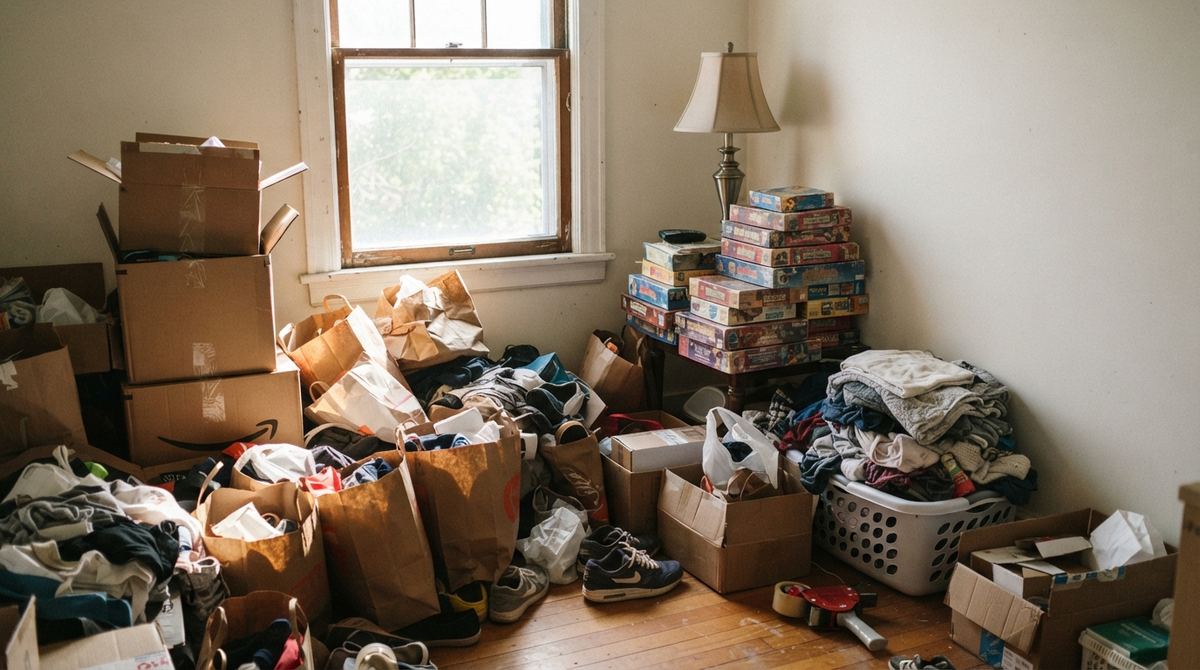
Every reseller has one: the bags, boxes and bins of things you bought to sell but haven’t listed yet. It starts as a few finds by the door and quietly turns into a corner of the garage. Here’s why it grows, what it’s really costing you, and a simple way to shrink it.
What a death pile is
“Death pile” is resellers’ slang for inventory you’ve bought but not listed. It isn’t for sale anywhere, so it isn’t earning anything. It’s just sitting there, waiting for the day you finally get to it.
A small pile is normal. You always have a few things waiting for photos, cleaning or a little research. It becomes a problem when you buy faster than you list, week after week, until the pile has its own room and you’ve forgotten what’s in the bottom box.
Why it keeps growing
- Buying is fun; listing is work. The hunt gives you a rush. Photos, measurements and descriptions don’t.
- The “I’ll list it later” items. Things that need research, cleaning, a missing piece checked or a tricky measurement get set aside, and later never comes.
- Big hauls. One estate sale or bulk lot can add more items than you list in a month.
- Out of sight, out of mind. Once a bag goes into a closed bin, it stops nagging you.
- No number on it. Most sellers know their sales to the dollar but couldn’t guess what their pile cost them. Without a number, there’s nothing to push against.
The real cost of unlisted stock
The pile feels free because you’ve already paid for it. It isn’t free.
- Money tied up. Every item in the pile is cash you can’t spend on your next great find. Two hundred items at $6 each is $1,200 sitting in bags.
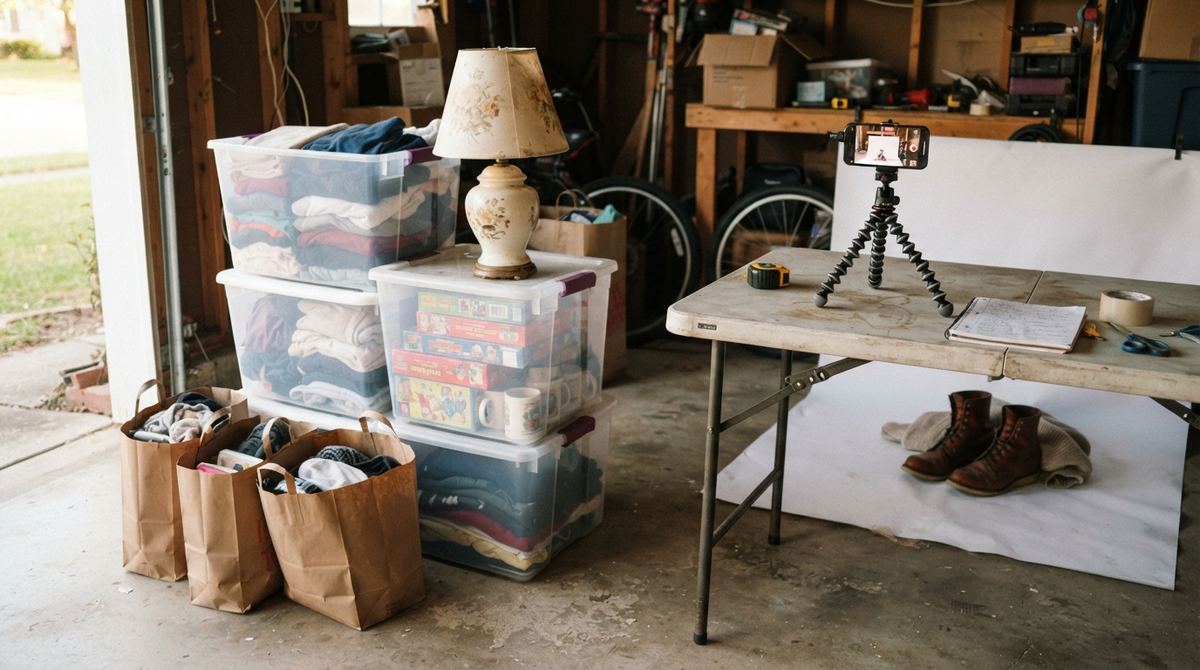
- Space. Shelves, bins, the spare room, sometimes a storage unit you pay for every month.
- Items lose value. Trends pass, seasonal items miss their season, electronics get older, and new copies of the same thing show up online at lower prices.
- Things go wrong in storage. Dust, damp, sun fading, batteries leaking, pieces wandering off.
- The mental weight. A pile you’re avoiding makes it harder to sit down and list anything at all.
A quick example: a $4 thrifted jacket that would have sold for $40 this winter might fetch $25 next spring, after it’s spent six months in a bin. You still paid the $4, but you lost $15 just by waiting.
First, find out how big it is
You can’t shrink what you can’t see. Before you change anything, get two numbers: how much you paid for everything in the pile, and how long it’s been sitting. Splitting it into three age groups works well:
- 0 to 30 days: fresh finds. Normal; this is your working stock.
- 31 to 89 days: slipping. List these before they go stale.
- 90 days or more: the real death pile. Each one needs a decision: list it now, or let it go.
If you don’t track purchases yet, a rough count is fine to start: go through the pile once, jot down each item and roughly what you paid, and write the month on the bag. From then on, log new finds as you buy them so the number stays honest.
A simple weekly routine
You don’t need a marathon weekend. You need a habit that lists more than you buy.
- Pick a listing time and protect it. Two or three short sessions a week beat one long one you keep moving.
- Set a number, not a feeling. “List 15 items this week” is a goal you can hit. “Get through the pile” isn’t.
- Oldest first, with a quick win. Start each session with one easy item to get going, then pull from the 90+ group.
- Batch the steps. Photograph ten items, then measure ten, then write ten. Switching tasks for every item is slow.
- Good enough beats perfect. A clear listing that’s live today earns more than a perfect one that waits another month.
- Match buying to listing. If you listed 15 this week, try to bring home no more than 15. That alone stops the pile from growing.
- Check the number once a week. Is the pile’s cost going up or down? Watching it fall is the best motivation there is.

When to cut your losses
Some items will never be worth the time to list. If something has sat past 90 days, would sell for very little, or turned out to be damaged, dirty or missing pieces, it’s fine to let it go. Your options:
- Donate it. Fast, clears space, and someone gets use of it. Keep a note of what you gave and what it cost you for your records.
- Sell it as a lot. Ten similar items that aren’t worth listing alone can make one decent bundle listing.
- Sell it locally. A yard sale, Facebook Marketplace or a local group moves bulky and low-value items with no shipping.
- Write it off. Broken, unsafe or truly worthless items go in the trash or recycling. Note what it cost you before it goes.
Letting go of a $3 item doesn’t lose you $3: the money was already spent. What it frees is the space and the time you’d have spent moving it around. Whatever you do, keep the record of what you paid. Donated and written-off stock is still part of your cost of goods: the real death pile guide shows how that loss counts at tax time.
Tip: set yourself a rule, like “anything over 120 days that would sell for under $10 gets bundled or donated.” A rule decides for you, so you don’t agonize over every item.
Keeping it from coming back
- Log items when you buy them, not when you list them, so nothing hides in the pile unrecorded.
- Date every find. A month on the bag or a bought date in your records is what lets you see the age.
- Be pickier in the store. If you wouldn’t list it this week, think twice about bringing it home (especially holiday stock: see our holiday prep guide).
- Give each item a home. A labeled bin or shelf for unlisted stock beats a heap by the door.
Quick answers
How big a death pile is normal?
There’s no magic number. What matters is the direction: if the pile’s cost is shrinking month over month and little of it is past 90 days, you’re in good shape.
Should I stop buying until it’s gone?
Not entirely; fresh finds keep your store interesting and your energy up. Just buy fewer items than you list until the pile is down to a size you’re comfortable with.
Is a death pile the same as dead stock?
Not quite. Dead stock usually means listed items that won’t sell. A death pile is items that were never listed. Both tie up money, and the same cut-your-losses options work for both.
How ReNventory helps
- Every find counted when you buy it. Snap a photo or scan a barcode in the store, enter what you paid, and the item lands in Waiting to list (your pile) with today’s date, even with no signal.
- Your pile, aged for you. The Dashboard shows what your unlisted stock cost you, split into 0–30, 31–89 and 90+ days, and whether the pile grew or shrank this month.
- A ready-made to-list queue. Tap the 90+ amount and you get the list of exactly those items. Work down it in your next listing session.
- Letting go, on the record. Move an item to the Death Pile stage with a reason (damaged, missing pieces, dirty, not selling) and what happened to it (donated, written off, or sold elsewhere). Its cost is kept for your tax records, and the Dashboard totals your losses by month and year.