
Reseller guides
The Cheapest Shipping Supplies for eBay Sellers (and What You Can Get Free)
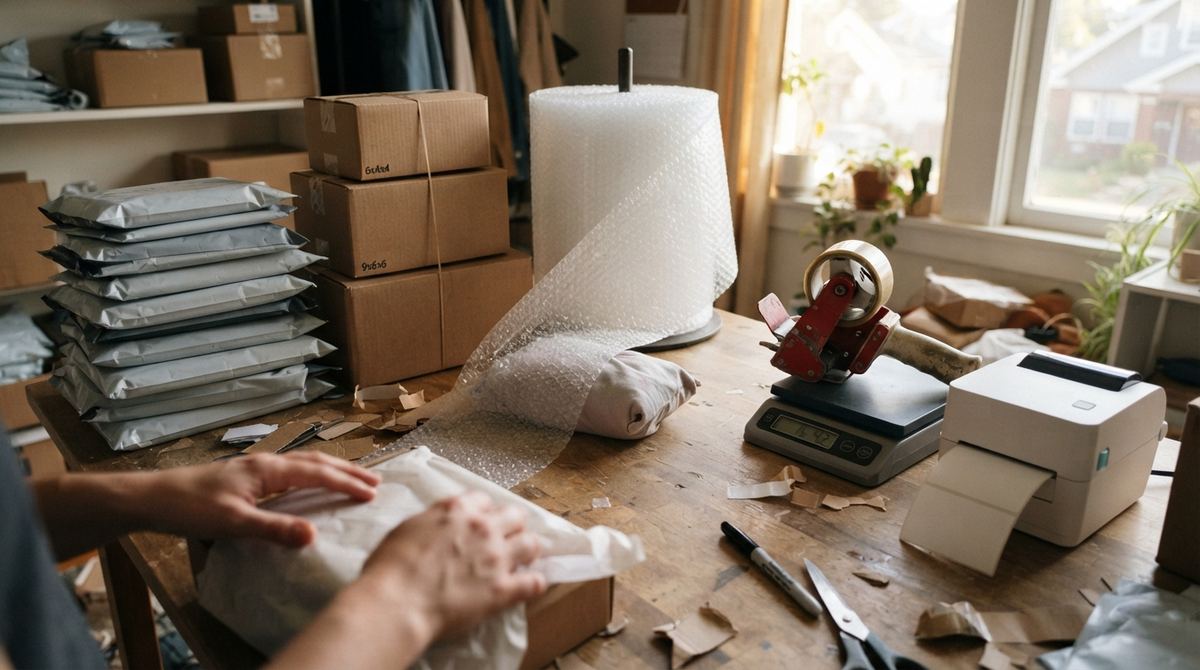
Shipping supplies are one of those costs that quietly eat into every sale. A few cents here on mailers and a dollar there on a box that’s too big add up fast when you ship every day. The cheapest shipping supplies for eBay sellers aren’t one magic product: they’re a small kit bought in bulk, a few free sources used the right way, and packages sized so you don’t pay to ship air.
The starter kit you actually need
Most resellers ship nearly everything with a handful of supplies. Start here and add only when a category demands it:
- Poly mailers in two or three sizes (for example 10×13 and 14×19 inches) for clothing and soft goods.
- Bubble mailers in a couple of sizes for small, flat or lightly fragile items: jewelry, games, small electronics.
- Boxes in a few common sizes (small cubes and a medium box or two) for anything breakable or heavy.
- Bubble wrap on a big roll, plus packing paper or air pillows to fill gaps.
- Packing tape and a tape gun. A tape gun is faster and wastes less tape than tearing by hand.
- A shipping scale and 4×6 labels (more on these below).
Resist buying every size “just in case”. Mailers and boxes take up room, and storage space is part of your costs too. Look at what you actually sold last month and stock for that.
Free shipping supplies (and the USPS box rule)
You can cut supply costs a lot without buying anything:
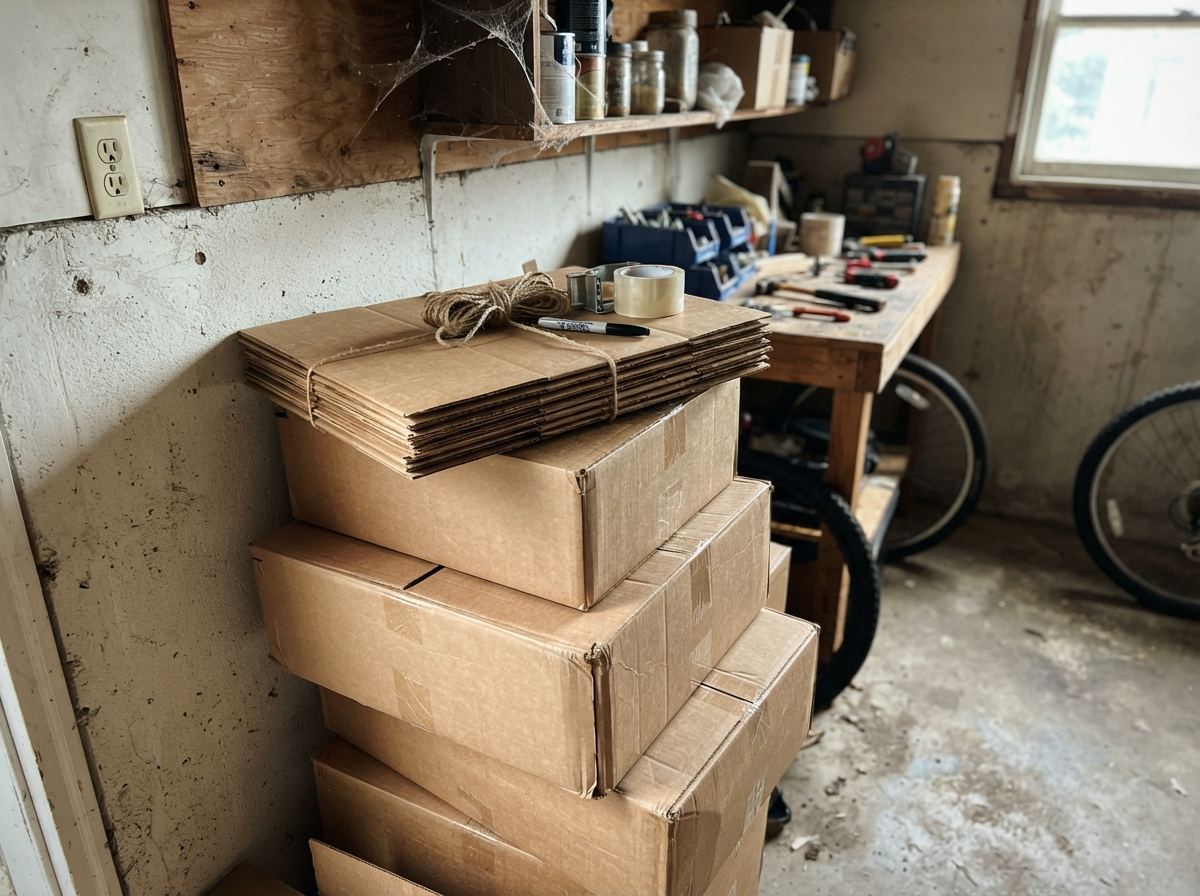
- USPS Priority Mail boxes and envelopes are free, including Flat Rate boxes. Order them from the USPS online store or pick them up at the Post Office. The catch: they’re only for Priority Mail (and Priority Mail Express). Using a Priority box for a cheaper service like Ground Advantage isn’t allowed, and the package can come back or arrive with postage due. Use them when Priority is genuinely the right service, for example a heavy item going a long way in a Flat Rate box.
- Reused boxes and padding. Clean boxes from your own deliveries, local shops or neighbors (Buy Nothing groups are great for this). Remove or fully cover old shipping labels and barcodes so the carrier only scans yours. Skip boxes that are crushed, damp or soft at the corners.
- Packing material from your own deliveries: air pillows, paper and bubble wrap that came in your own orders work fine as filler.
Poly mailers vs bubble mailers vs boxes
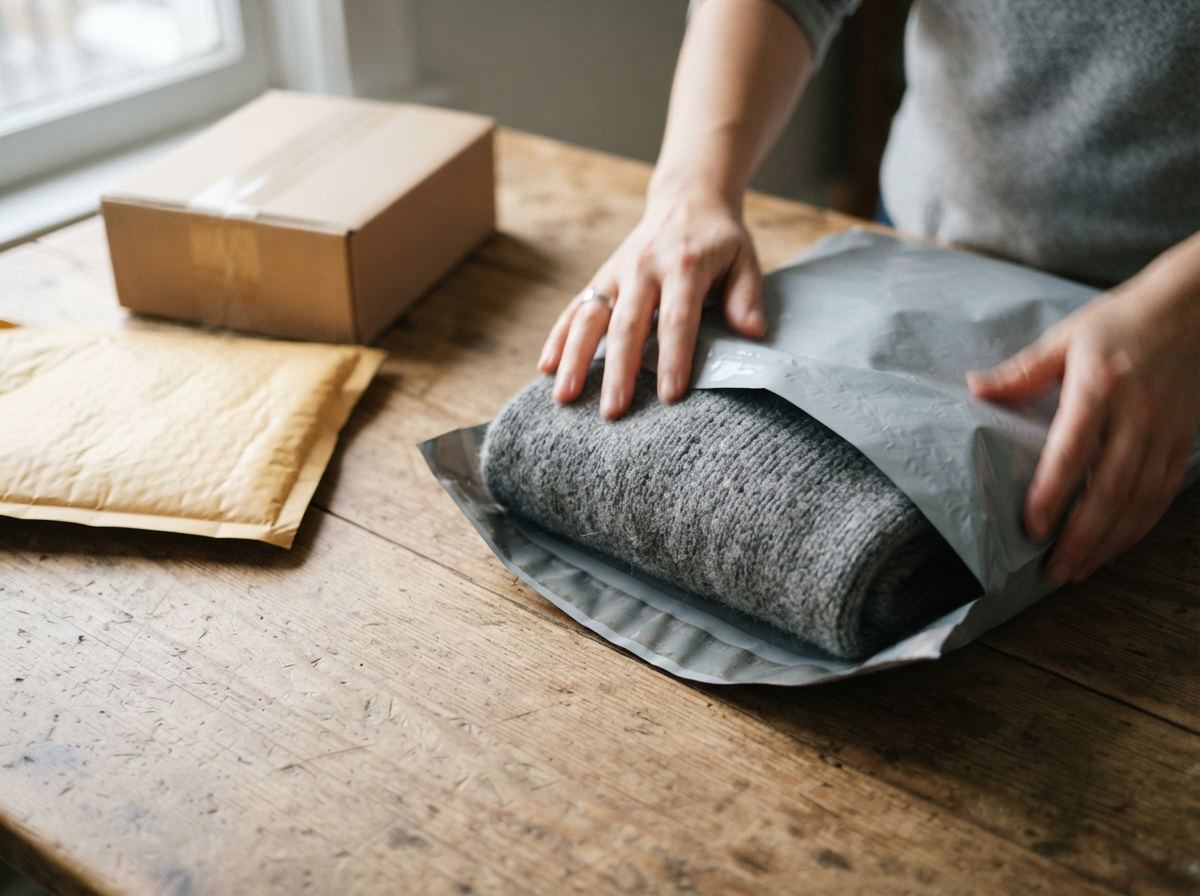
- Poly mailers are the cheapest and lightest. Use them for clothing, linens, soft bags and anything that can’t break. Fold clothes neatly and add a plain bag inside if it might rain.
- Bubble mailers add a little padding for small items that can scuff or bend: jewelry, cards in a top loader, video games, small accessories. They aren’t enough for glass or ceramics.
- Boxes for anything that can break, has corners to protect, or is heavy. Wrap the item, then fill the box so nothing moves when you shake it. A good test: if you’d worry about dropping it from waist height, it goes in a box.
Packing well is cheaper than a return. One broken mug can cost you the sale, the shipping both ways and a bad feedback, which is more than a year’s worth of extra bubble wrap.
Where to buy cheap
- Buy in bulk online. Mailers, boxes, labels and tape are much cheaper per piece in packs of 100 or more from packaging suppliers than in small packs at office or big-box stores. Compare the price per piece, not the pack price.
- Bubble wrap by the big roll. Many resellers buy large rolls straight from a bubble wrap supplier, such as American Bubble Boy, instead of small rolls at a store: great prices and fast, friendly service. Perforated rolls save time cutting.
- Warehouse clubs and dollar stores for tape and the occasional pack of mailers, when the price per piece beats what you’d pay online.
- Buy what you ship most in bulk, and the odd sizes in small packs. A case of boxes you rarely use isn’t a bargain.
Box size changes your postage
Postage depends on weight and, for bigger packages, on size. Carriers charge larger, light boxes by their “dimensional weight” (the space they take on the truck), and in July 2026 USPS changed how that’s figured in a way that makes oversized boxes cost more. The practical rules don’t change:
- Use the smallest box that protects the item. An inch or two of padding all around is enough for most things.
- Mailers beat boxes for soft goods on both supply cost and postage.
- Measure and weigh before you buy the label. Guessing low means postage due or a returned package; guessing high means paying for nothing.
- Buy labels through eBay or a shipping service rather than at the counter: online labels are usually cheaper than retail postage, and small, dense packages can qualify for lower “cubic” prices through some services.
Prices and rules change during the year, so check the current rates in eBay’s label tool or on USPS’s price pages when something doesn’t look right.
A scale and a label printer pay for themselves
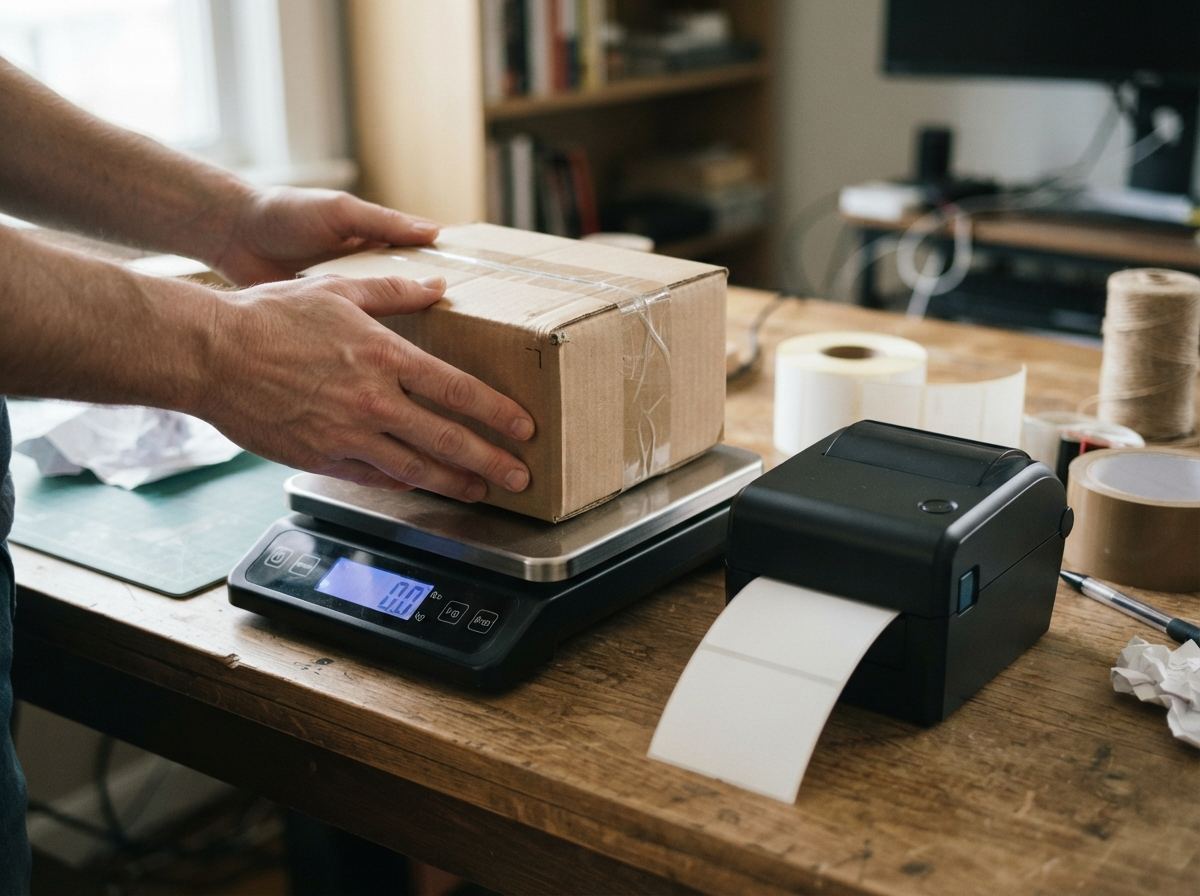
- A digital shipping scale that reads in ounces and handles 50 pounds or more costs less than a few wrong labels. Kitchen scales work for small items but often top out too low.
- A 4×6 thermal label printer prints with heat, so there’s no ink to buy. Peel-and-stick 4×6 labels in bulk rolls or fanfold stacks are cheap, and you skip the tape-over-paper step. Many resellers use the same printer for SKU and bin labels.
Both are one-time costs you’ll use on every sale. If you ship more than a handful of packages a week, they’re usually the first upgrade worth making.
Count supplies in your profit
Mailers, boxes, tape and labels are real business costs. A sale that looks like $15 profit can be $13 once the mailer, bubble wrap and label are counted. Keep receipts for supplies; they’re generally deductible business expenses (ask your tax professional how to record them). Our guide to tracking cost of goods sold for reseller taxes explains how item costs and other expenses fit together.
A simple habit: once a month, add up what you spent on supplies and divide by the number of packages you shipped. That’s your supply cost per sale, and it’s worth knowing when you decide whether a cheap item is worth listing at all. If a find won’t clear your fees, shipping and supplies with room to spare, our guide to what to buy at thrift stores can help you spot that before you pay.
Quick answers
Where can I get free shipping supplies?
USPS gives away Priority Mail and Priority Mail Express boxes and envelopes (online or at the Post Office), but only for those services. For everything else, reuse clean boxes and padding from your own deliveries, local stores or neighbors.
Can I use a free Priority Mail box for Ground Advantage?
No. Priority boxes are for Priority Mail only. For Ground Advantage, use your own box or mailer, or a reused box with the old markings covered.
Are poly mailers or bubble mailers better?
Poly mailers for clothing and soft goods (cheapest and lightest); bubble mailers for small items that need a little padding. Anything that can break goes in a box.
What’s the cheapest way to ship clothes?
Fold them tightly into a poly mailer and buy the label online. Light, soft packages are usually the cheapest kind to send.
Do I need a thermal label printer?
Not to start; a regular printer and tape work. Once you ship regularly, a thermal printer saves ink, tape and time, and prints SKU and bin labels too.
How ReNventory helps
- Find it fast when it sells. Every item keeps its storage location (bin or shelf), so the sold item is easy to grab and pack.
- Labels from the same printer. Print SKU labels for items and bin labels for your shelves, then scan a label in the app to open the item or see what’s in a bin.
- SKUs that make sense. Automatic SKUs in your own format (try our free eBay SKU generator, or read how to create SKUs for eBay).
- Sold items update themselves. Connect eBay and sales move your items to Sold, so you know what to pack.
- Know your numbers. Reports show your sales, cost of goods sold and profit, ready for tax time.